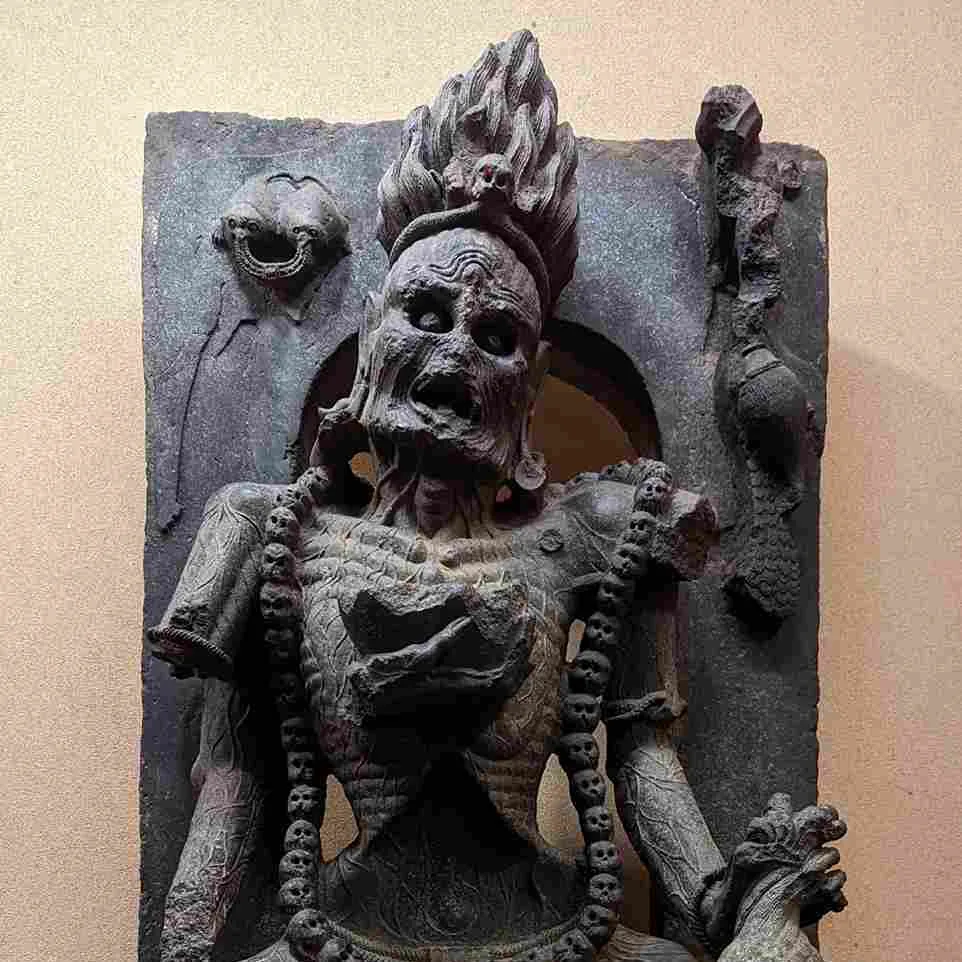
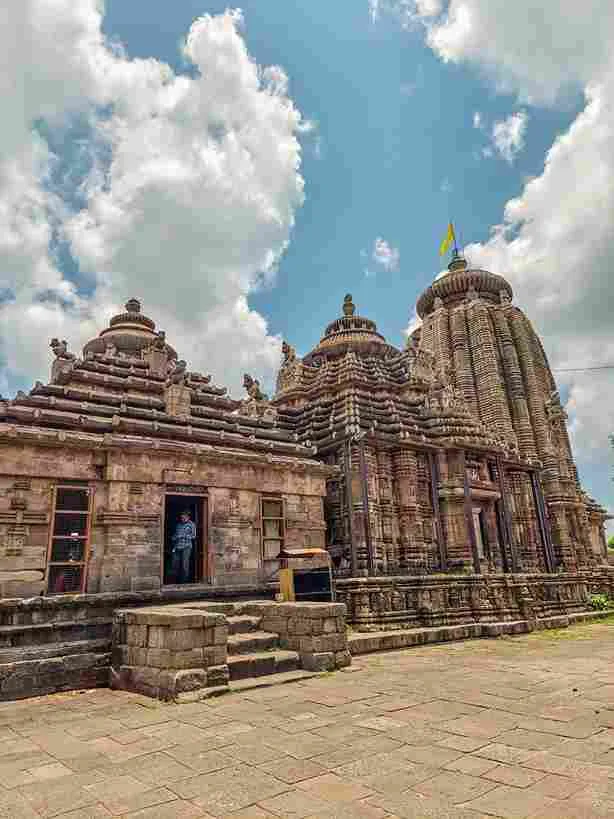
Vaital Deul, also written Baitala Deula, is an eighth century temple of the goddess Chamunda in Bhubaneswar, standing in the same compound as the Sisireswara Temple near Bindusagar. Its barrel-vaulted khakhara tower is a rare form in Kalinga architecture, and the shrine is described as the earliest and most interesting Shakta shrine in Odisha. Inside, an eight-armed Chamunda sits on the back wall with Bhairava and a group of eight Matrikas, and the carvings point to tantric worship.
quick facts
- district
Khordha
- dress code
Ethnic or traditional dress is customary.
know before you go
The sanctum is very dark, so images inside are hard to see without a lamp.
do
- Remove footwear before entering the temple compound
- Keep your voice low inside the shrine
- Follow the guidance of the temple servitors
- Make room for devotees who are praying
avoid
- Do not climb on the structures or touch the carvings
- Do not litter the compound or the tank
- Do not block the doorways while others wait to worship
how to reach
The temple stands in the old town of Bhubaneswar in the compound shared with the Sisireswara Temple, near Bindusagar. A lane from Kedar Gouri Chowk leads to it, and it is reached by road from the city.
address: Vaital Deul, Rath Road, Old Town, Bhubaneswar, Khordha district, Odisha
history and significance
why it matters
The temple is a key monument of the Shakta tradition in Odisha. It is dedicated to Chamunda and is associated by scholars with the Kapalika and tantric practices of early medieval Bhubaneswar.
Its khakhara tower and its unusual group of eight Matrikas make it important in the study of the development of temple architecture and iconography in Odisha.
history
Scholars such as Donaldson date the temple to the last quarter of the 8th century CE, under the Bhauma-Kara kings, and consider it slightly later than the neighbouring Sisireswara temple on the evidence of its more advanced imagery. A Cornell archive record dates it to the late 8th or early 9th century.
The name Vaital is most widely explained, following K. C. Panigrahi, as coming from vetala, a spirit, linked to Kapalika and tantric practices. The medieval text Svarnnadri-mahodaya places a Chamunda shrine to the west of Bindusagar, which Panigrahi identifies with this temple. The Yoshodharakavya of Vadiraja Suri describes human sacrifice to Chamunda, and a yupa, a sacrificial pillar, stands in front of the jagamohana, which supports the tantric association. Other explanations of the name exist and are less accepted.
what to see
The deul has a rectangular plan on a low platform, and the bada has four pabhaga mouldings. The tower is of the khakhara type and rises in two stories. It carries vajra-mastakas, and the front shows Nataraja above and the chariot of Surya below. The jagamohana is oblong and has four small rekha-order shrines at its corners.
The entrance is a narrow doorway on the east with female doorkeepers. The sanctum is very dark and has fifteen niches. Chamunda sits on the back wall in ardhaparyanka posture with eight hands, with an image of Bhairava with a skeletal body and eight Matrikas, including Varahi, around her. Loose sculptures in the jagamohana include Ganesha, Narasimha, Parvati, Mahishasuramardini and a naga.
rituals and festivals
The sources consulted give no festival calendar for this temple.
nearby
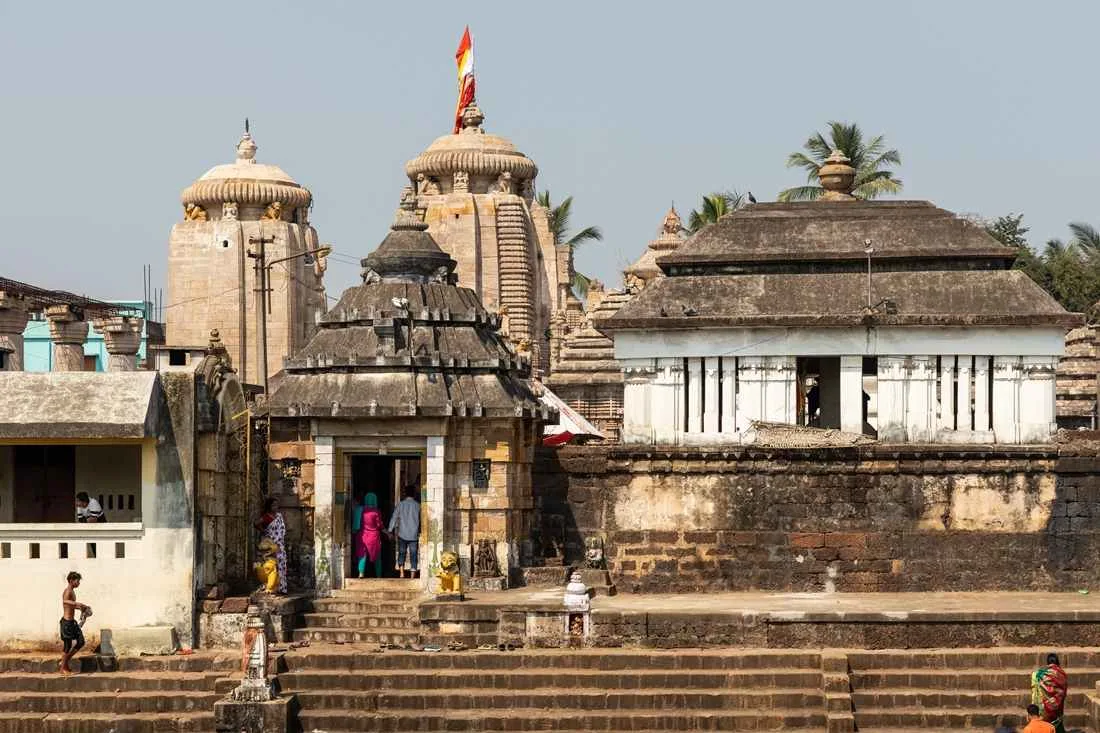
- Sisireswara Temple, in the same compound
- Bindusagar tank
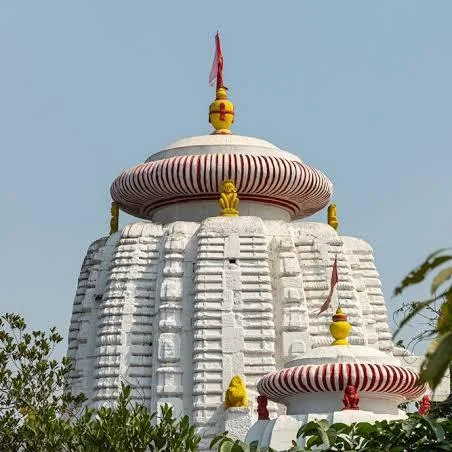
- Nilakantheswar Temple, on a lane near the west bank of Bindusagar
other temples nearby7
questions visitors ask
Which goddess is worshipped at Vaital Deul?
Chamunda, shown on the back wall of the sanctum with eight hands, seated beside Bhairava and eight Matrikas.
What is a khakhara tower?
It is a barrel-vaulted tower form, different from the usual curved rekha tower, and it is rare in Kalinga architecture. Vaital Deul is a leading example.
Why is it linked to tantric worship?
Scholars link the name Vaital to vetala spirits, and the temple has a sacrificial pillar and imagery of Bhairava and Matrikas. This is a scholarly interpretation of the evidence.