
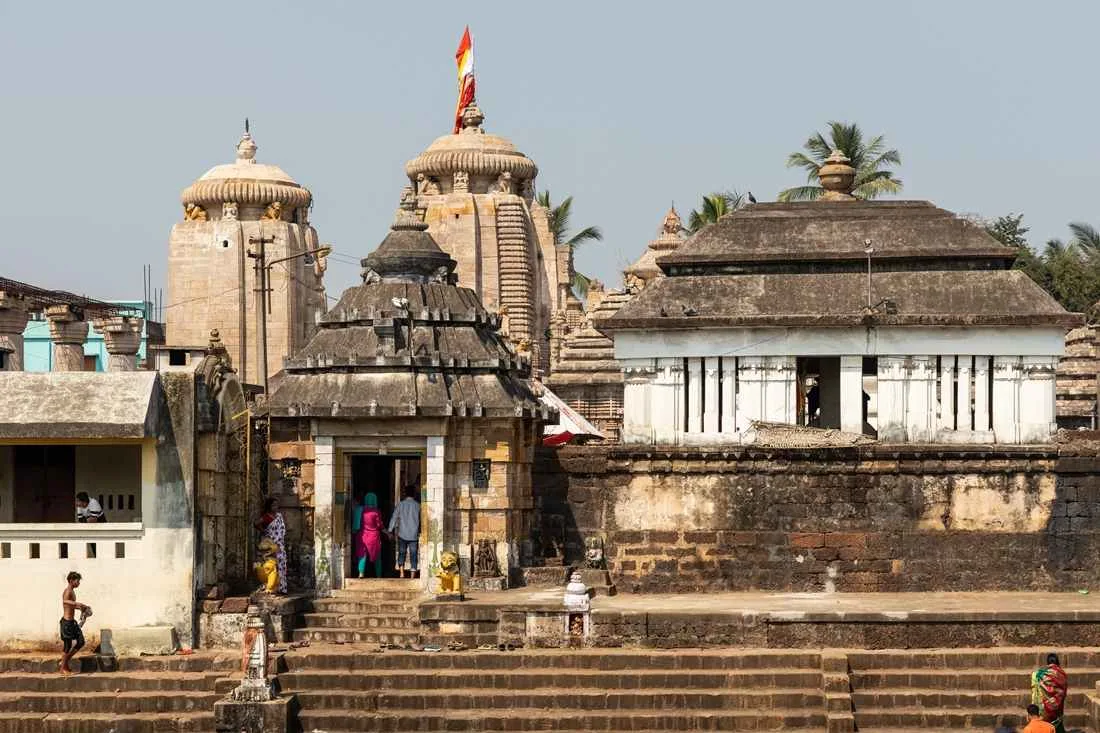
Kapileswar Temple is a Shiva shrine at the southwestern edge of Kapileswar village in the old town of Bhubaneswar, at the end of Kapileswar Road from the Lingaraja Temple. It stands on the northern bank of the Manikarnika tank. The sanctum holds a linga in a circular yonipitha, and the temple is regarded as a satellite of Lingaraja. It is protected as a monument and is one of the main places in Odisha to keep the night vigil of Maha Shivaratri.
quick facts
- district
Khordha
- best time to visit
Maha Shivaratri is the main occasion, when thousands visit at night.
- dress code
Ethnic or traditional dress is customary.
know before you go
do
- Remove footwear before entering the temple compound
- Keep your voice low inside the shrine
- Follow the guidance of the temple servitors
- Make room for devotees who are praying
avoid
- Do not climb on the structures or touch the carvings
- Do not litter the compound or the tank
- Do not block the doorways while others wait to worship
how to reach
The temple is at the end of Kapileswar Road, which runs from the Lingaraja Temple to Kapileswar village in the old town of Bhubaneswar, about 6.2 km from Bhubaneswar railway station by public transport. It is reached by road, and the Lingaraja Temple is about 1 km away.
address: Kapileswar village, Old Town, Bhubaneswar, Khordha district, Odisha
history and significance
why it matters
Kapileswar is an important Shiva shrine of the Ekamra area and is a major venue for Maha Shivaratri. Local servitors say the place is the birthplace of the sage Kapila, regarded as the father of the Sankhya philosophy, which is a local tradition.
The temple precinct holds around thirty-three other monuments, and the Manikarnika tank beside it is used by devotees for bathing at festival time.
history
The temple is traditionally dated to the 14th century, in the time of the Gajapati king Kapilendra Deva, and an inscription in the temple is credited to him by an Archaeological Survey of India record and by local belief. Inscriptions and sculptural fragments found at the site suggest, however, that an earlier temple may have stood here before the 11th century, so the dating is debated. One popular website claims a history reaching back to the 5th century, but this is not supported by the other sources consulted.
The temple was recently notified as a monument of national importance and added to the list of ASI protected monuments, according to a news report. The nata-mandira and bhoga-mandapa are later additions to the original shrine and jagamohana.
what to see
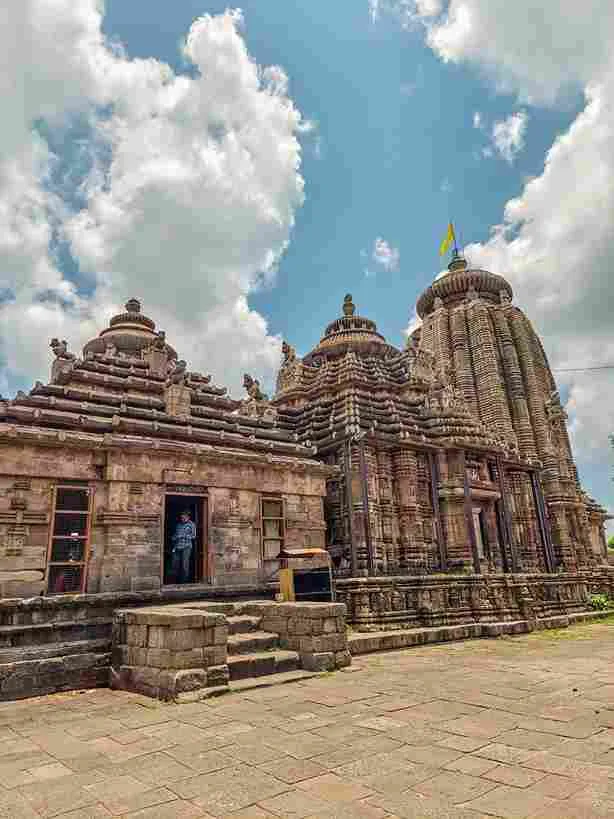
The temple is in the Kalinga style. The vimana is a rekha deula about 11.4 metres high, and the jagamohana is of the pidha order. The nata-mandira and the bhoga-mandapa are later flat-roofed additions. The sanctum holds a linga in a circular yonipitha.
The precinct lies on the northern embankment of the Manikarnika tank and includes the Baidyanatha, Ghanteswara, Guptesvara, Siddhesvara and Somabaresvara Shiva temples, Laxmi Narayan and other minor shrines. The Kalika Shiva temple stands beyond the southern compound wall near the tank.
rituals and festivals
On Maha Shivaratri, thousands of devotees gather at night and keep the jagara vigil by lighting earthen lamps. A holy lamp is taken to the top of the temple. Devotees pray at the Manikarnika pool and bathe in it, and they offer coconuts and betel nuts.
The linga has a hole at its centre called nasa, and devotees believe that the linga breathes through it. A servitor shows this by holding a lamp near the opening.
nearby
- Lingaraja Temple, about 1 km away
- Manikarnika tank, beside the temple
- Kalika Shiva temple, near the tank beyond the southern wall
other temples nearby4
questions visitors ask
Why is Kapileswar known for Maha Shivaratri?
It is one of the main venues in Odisha for the night vigil. Devotees light earthen lamps, keep the jagara, and bathe in the Manikarnika pool.
What is the nasa in the linga?
It is a hole at the centre of the linga. Devotees believe the linga breathes through it, and a servitor shows this by holding a lamp near it.
When was Kapileswar built?
It is traditionally dated to the 14th century under Kapilendra Deva, though inscriptions and sculptures suggest an older temple before the 11th century.