
Nilakantheswar Temple is a small Shiva shrine in the Matiapara area of Puri, on the bank of the Indradyumna tank, about four hundred metres northeast of the Gundicha Temple. It faces east and is built of sandstone plastered with lime mortar. It is one of the five Shiva shrines of Puri known as the Pancha Pandava. The name Nilakantha, the blue-throated, recalls Shiva drinking the poison that rose from the churning of the ocean. The shrine is managed by a local committee of Puri.
quick facts
- district
Puri
- dress code
Ethnic or traditional dress is customary.
know before you go
do
- Remove footwear before entering the temple compound
- Keep your voice low inside the shrine
- Follow the guidance of the temple servitors
- Make room for devotees who are praying
avoid
- Do not climb on the structures or touch the carvings
- Do not litter the compound or the tank
- Do not block the doorways while others wait to worship
how to reach
The temple is within Puri town, on the bank of the Indradyumna tank, about 400 metres northeast of the Gundicha Temple. Visitors can reach it on foot from the Gundicha Temple. Puri railway station is the nearest station.
address: Matiapara, beside Indradyumna tank, Puri, Odisha
history and significance
why it matters
Nilakantheswar is one of the Pancha Pandava Shiva shrines of Puri and, according to the Skanda Purana as cited in the Orissa Review, a Nilakantha Mahadeva shrine is placed at the top portion of the Shankha Kshetra. It is also counted as one of the eight guardian Shiva deities of Purusottama Kshetra.
The tradition behind the name is that Shiva took the poison that came out of the churning of the ocean by gods and demons, and so became known as Nilakantha.
history
The sources record no authentic historical document for the building date of this temple. An article in the Orissa Review notes that its architectural features indicate it was built after the present Jagannatha temple. Jagabandhu Padhi is cited as holding that Nilakantheswar and Kapalamochana belong to the same period, while H. S. Pattanaik calls it a later structure with little sign of great antiquity. B. K. Ratha is cited as placing it in the 15th century, and the article tentatively assigns the present temple to the second half of the 15th century, probably built by a Suryavamsi ruler of Odisha.
A travel listing gives a different account, saying the site began in the 7th century as a Buddhist site. That claim is not supported by the Orissa Review and is not adopted here. Modern mortar now covers every structure of the temple.
what to see
The temple is small, with three structures: the vimana, the jagamohana and the natamandapa, all in sandstone and covered with lime mortar. The vimana is a pidha deula about seventeen feet high, now about twelve feet above the surface of the complex, with a square base of twelve feet. The side niches hold Ganesha, Kartikeya and Shiva with Parvati.
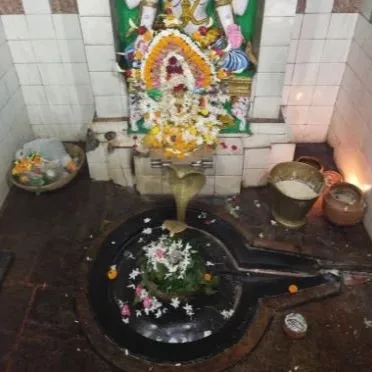
The linga is set in a shaktipitha and sits about one foot below it, so it is not visible from outside. A four-armed Narayana image stands on the back wall of the sanctum, and the sanctum floor is about five feet below the complex surface. The natamandapa holds an image of Jagannatha and a Kali image, and its walls carry patta-style paintings of the Dasamahavidya and a ten-armed Banambara Shiva. Only the eastern side has a boundary wall, with two large jhapa simha lions at the gate.
nearby
- Gundicha Temple, about 400 metres to the southwest
- Indradyumna tank, beside the temple
other temples nearby7
questions visitors ask
Why is Shiva called Nilakantha?
According to tradition, Shiva drank the poison that rose from the churning of the ocean by gods and demons, and his throat turned blue.
Is the linga visible?
No. The linga is set about one foot below the shaktipitha in the sanctum and is not visible from outside.
When was the temple built?
There is no authentic record. The Orissa Review tentatively assigns the present structure to the second half of the 15th century.
