
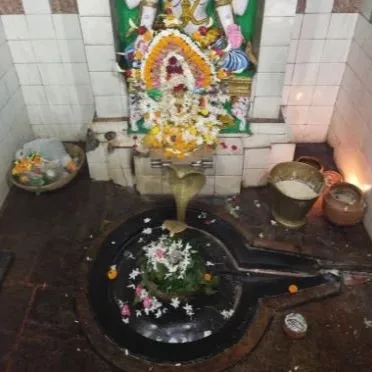
Lokanatha Temple stands about two kilometres west of the Jagannatha Temple and guards the western edge of Puri town. Its presiding deity is a Shiva linga that, according to tradition, Rama installed on his way to Lanka. The linga lies under the water of a natural spring and is shown to devotees only once a year. The temple is counted among the five Shiva shrines of Puri known as the Pancha Pandava, and Lokanatha is regarded as the guardian of the Jagannatha temple's treasury.
quick facts
- district
Puri
- best time to visit
Visit around Maha Shivaratri, when the linga is shown to devotees, or on Mondays in the months of Vaishakha, Shravana and Kartika, which are marked as special days.
- dress code
Ethnic or traditional dress is customary.
know before you go
Outside the annual Pankoddhar night the linga stays under water, and devotees view the sanctum through a window of the jagamohana.
do
- Remove footwear before entering the temple compound
- Keep your voice low inside the shrine
- Follow the guidance of the temple servitors
- Make room for devotees who are praying
avoid
- Do not climb on the structures or touch the carvings
- Do not litter the compound or the tank
- Do not block the doorways while others wait to worship
how to reach
The temple is within Puri town, about 2 km west of the Jagannatha Temple, and is reached by road. Puri railway station is the nearest station.
address: Lokanatha Temple, west of the town centre, Puri, Odisha
history and significance
why it matters
Of the five prominent Shiva shrines of Puri, Lokanatha is described by researchers as the most important from the cultural point of view. Locally the shrine is called Bhimasena, after the strongest of the five Pandava brothers.
A representative image of the deity, called Bhandara Lokanatha, is kept inside the Jagannatha temple, where he is the guardian of the Ratna Bhandara, the treasury. Lokanatha is tied to Jagannatha in rituals such as Shivaratri, Chandana Yatra and Sital Sasthi.
history
According to tradition, Rama reached Puri while searching for Sita and sat down with a vow to see Shiva. People of a nearby Sabara settlement offered him a lau, a pumpkin that looked like a linga. Rama installed it and prayed for success, and the linga came to be called Laukanatha, which a later age shortened to Lokanatha. This is a tradition, not a documented event.
An article in the Orissa Review notes that nothing in the present temple indicates remote antiquity. It suggests that the name changed from Lokesvara or Laukanatha to Lokanatha in the 12th or 13th century, and it tentatively assigns the present temple to the 11th century, before the present Jagannatha temple. It also records a tradition, attributed to M. M. Tripathy, that the five Pandavas stayed in Puri during their exile and that five Shiva temples commemorate this. Scholars disagree on the date, and the temple is said to have been buried about fifteen feet under sand by natural calamities.
what to see
The temple faces west, an orientation that one scholar links to Pashupata shrines of the Sailodbhava period. It has four parts: the vimana, the jagamohana, the natamandapa and the bhogamandapa. The vimana is a pancharatha rekha deula about thirty feet high, and the other three halls are of the pidha order. Much of the wall is covered with marble.
The side niches of the vimana hold Uma-Maheswara, Kartikeya and Ganesha. A composite image of Hari-Hara is set in the outer south wall of the jagamohana. The sanctum is filled with water from a natural spring, which is drained through an open channel into the neighbouring Parvatisagara tank. The compound lies about ten feet below the road.
rituals and festivals
On the night of Pankoddhar Ekadashi, three days before Shivaratri, the water around the linga is bailed out so that devotees can see and worship it. This is the one occasion in the year when the linga is visible.
Shivaratri is observed with great devotion. A fair is held on Sankranti Somavara, and Mondays in Vaishakha, Shravana and Kartika are marked as special days. Lokanatha also has a role in the Chandana Yatra and Sital Sasthi rituals of Jagannatha.
nearby
- Jagannatha Temple, about 2 km to the east
- Parvatisagara tank, in the close neighbourhood of the temple
other temples nearby7
questions visitors ask
Who installed the linga at Lokanatha Temple?
According to tradition, Rama installed it on his way to Lanka, using a pumpkin that looked like a linga. This is a tradition and is not documented history.
When can devotees see the linga?
The linga stays under spring water through the year. On the night of Pankoddhar Ekadashi, three days before Shivaratri, the water is bailed out and devotees can worship it.
What is Lokanatha's link to the Jagannatha temple?
A representative image called Bhandara Lokanatha is kept in the Jagannatha temple, and he is regarded as the guardian of its treasury, the Ratna Bhandara.
