


Performing Culture, Producing Belief - Rethinking Odia Identity in an Age of Narration
- Soumyaranjan Sahoo

- Apr 22
- 3 min read
There is a distinct confidence with which culture is articulated today. It appears in the captions of social media posts, in the curated scripts of heritage walks, in the assertive declarations of what is “authentic,” “ancient,” and “ours.” Odisha, in this moment, stands within a renewed movement toward identity, language, ritual, and memory. Beneath this resurgence lies a deeper inquiry into what is being performed and what is being believed.
Culture, as Clifford Geertz describes, exists as “a system of inherited conceptions expressed in symbolic forms by means of which people communicate, perpetuate, and develop their knowledge about and attitudes toward life.”
This formulation places emphasis on expression, communication, and development. Odisha’s current moment reflects a transformation in how these symbolic forms are expressed, circulated, and legitimised.
Culture today exists simultaneously as lived practice and articulated narrative. Belief exists simultaneously as an inherited disposition and a constructed understanding.
The Performance of Culture
In urban centres such as Bhubaneswar, culture appears through curated forms: guided walks through temple architecture, short-form videos explaining rituals, structured narratives around festivals and heritage. These forms signal an active engagement with identity and a desire to articulate belonging.
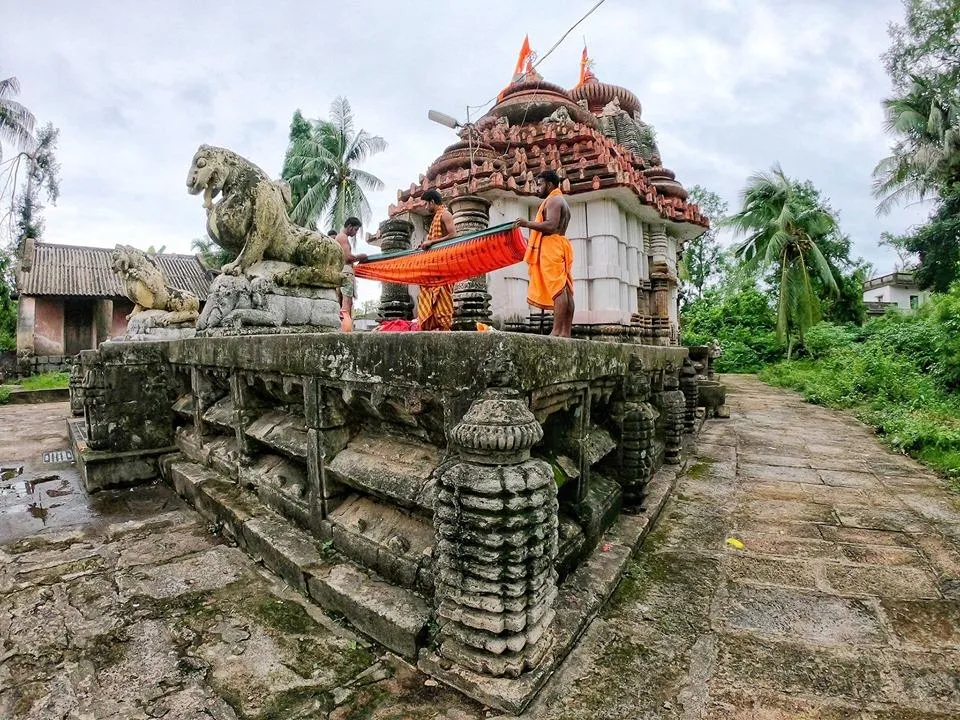
Performance introduces a deliberate structure. Ritual, in this context, aligns with presentation. Knowledge aligns with visibility. Cultural articulation increasingly follows the logic of the medium through which it is communicated. Arjun Appadurai, through the concept of mediascapes, situates culture within flows of images and narratives that shape imagination and identity.
Ritual explanation circulates alongside ritual experience. Festival narratives travel across platforms. Cultural symbols become part of a broader communicative system where meaning is framed, edited, and shared.
The Production of Belief
Belief emerges through circulation, repetition, and resonance. It is shaped through exposure, reinforced through familiarity, and stabilised through collective acceptance.

Festivals such as Ratha Yatra are understood through a range of narratives that move across communities and platforms. These narratives gain traction through repetition and engagement. Cultural understanding becomes linked to the frequency and form of its articulation.
Pierre Bourdieu, through the concept of habitus, explains how dispositions are internalised and reproduced. Contemporary contexts extend this process through mediated exposure. Cultural knowledge travels through networks that shape recognition and acceptance.
Belief operates through presence. Narratives that circulate widely acquire familiarity. Familiarity supports acceptance.
Rural Memory, Urban Narrative

Rural Odisha continues to sustain patterns of everyday cultural practice through routine, seasonal rhythms, and intergenerational continuity.
Rituals are embedded within daily life. Food practices align with climate and locality. Language operates through dialects shaped by region. Cultural knowledge is transmitted through participation, observation, and repetition.
These practices interact with expanding channels of communication. Mobile devices, video platforms, and circulating narratives introduce additional layers of interpretation. Cultural practices become part of broader representational systems. Rural and urban contexts connect through continuous exchanges of narrative and practice.
A cyclical movement becomes visible:
Rural practice → Urban narration → Digital amplification → Rural reinterpretation
This movement reflects ongoing processes of translation, adaptation, and circulation.
The Question of Authority

Cultural authority operates through multiple sites. Community memory, ritual specialists, institutions, and contemporary narrators contribute to the articulation of meaning.
The distribution of authority expands across platforms. Cultural organisations curate experiences. Digital creators frame narratives. Audiences participate through engagement and validation.
Michel Foucault situates knowledge within systems of power that shape what is expressed and recognised. Cultural narratives function within these systems. Visibility contributes to recognition. Repetition contributes to stability.
Authority aligns with the capacity to frame and circulate meaning within these networks.
Between Emotion and Knowledge
Cultural engagement is supported by emotional investment, shared identity, and collective participation. These elements sustain continuity and connection.
Anthropological inquiry focuses on the processes through which knowledge is formed, transmitted, and internalised. It examines the structures that support belief and the pathways through which meaning is articulated.
Belief, in this context, is understood as a social process shaped by interaction, communication, and repetition.

Toward a Cultural Method
Odisha presents a layered cultural field where multiple systems of practice and narration coexist. Rural practices continue within lived contexts. Urban articulations structure and present these practices. Digital platforms extend their circulation.
This landscape supports a methodological approach centred on:
Observing cultural performance
Tracing narrative translation
Analysing belief formation
Anthropology offers a framework to study these processes through interpretation, comparison, and contextual understanding.

Culture as Process
Culture in Odisha operates as an evolving system of meaning shaped through practice, narration, and belief. It is sustained through participation, articulated through representation, and reinforced through circulation.
The study of culture, in this context, focuses on how meaning is created, shared, and stabilised across different environments. Odia identity emerges through these ongoing processes of interaction and interpretation.
Anthropology provides the tools to engage with this field through careful observation, analytical depth, and sustained inquiry into how culture continues to be produced and understood.


Comments