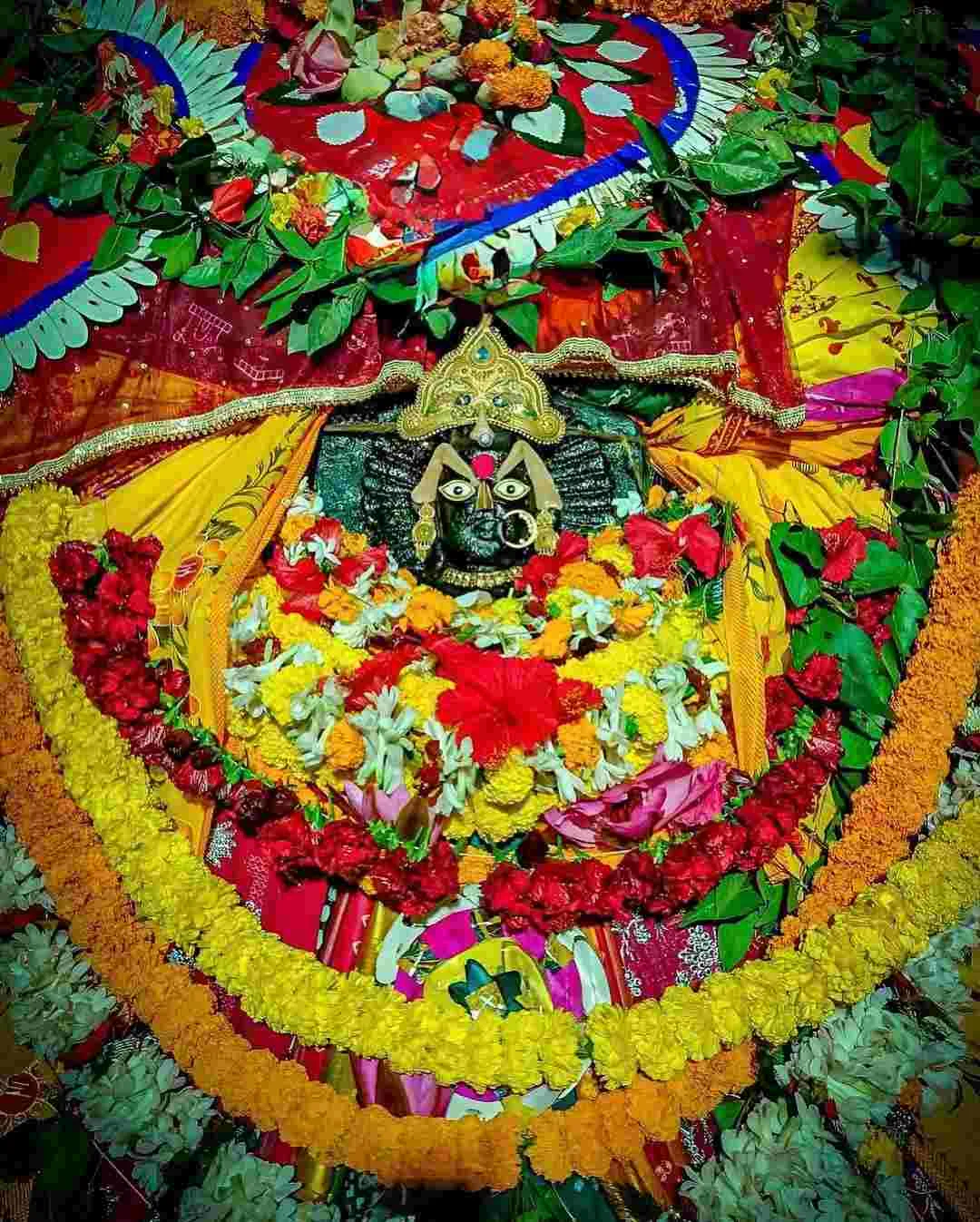
The Biraja Temple at Jajpur is the shrine of the goddess Biraja, a form of Durga, and Jajpur is known as Biraja Kshetra. The main image shows the two-armed goddess piercing Mahishasura's chest while one foot rests on a lion. The temple, built in the Kalinga style in its present form during the 11th century CE, is counted among the great Shakti peethas of Odisha. Pilgrims also come for the Sharadiya Durga Puja and for ancestral rites at the Nabhi Gaya well.
quick facts
- district
Jajpur
- best time to visit
The Sharadiya Durga Puja in Ashwin is the temple's main period and is a 16 day puja. Expect large crowds then.
- dress code
Ethnic or traditional dress is customary.
know before you go
do
- Check the Durga Puja dates before travelling
- Plan road travel from Cuttack or Bhubaneswar with extra time
- Follow the temple's instructions on offerings
- Keep valuables secure in crowds
avoid
- Do not rely on one source for rail and road timings
- Do not litter around the temple and the well
- Do not block lanes during festival days
how to reach
Jajpur is about 125 km north of Bhubaneswar. The nearest railway stations are Cuttack and Jajpur Keonjhar Road. Buses run from Cuttack and from Bhubaneswar, and express buses are faster than local ones. Auto rickshaws connect the Netaji Bus Terminal, about 3 km from Jajpur town.
address: Jajpur Town, Jajpur district, Odisha
history and significance
why it matters
Jajpur is called Biraja Kshetra and Biraja Pitha. According to the Tantra Chudamani, Sati's navel fell in the Utkala kingdom, also called Biraja Kshetra, and the Brahmayamala Tantra and Adi Shankara's Ashtadasha Shakti Pitha Stuti link the region to Shakti worship.
The Skanda Purana is said to describe the area as cleansing pilgrims, and tradition holds that Jajpur has about one crore Shiva lingas.
history
According to Wikipedia, the present temple was built during the 11th century CE. The place itself is far older in tradition: the Tantra Chudamani places the fall of Sati's navel in the Utkala kingdom, and Adi Shankara's hymn on the eighteen Shakti peethas names the goddess of this region as Girija.
Jajpur has long been a pilgrimage centre, remembered as Biraja Kshetra, and sources on the temple trace its worship through Puranic and Tantric texts. The exact dates of earlier structures are not established in the sources checked, so none are claimed.
what to see
The temple is in the Kalinga style. The main image shows Durga with two arms, spearing Mahishasura's chest, with one foot on a lion. The crown carries Ganesha, a crescent moon and a lingam.
The complex holds several shrines to Shiva and other deities, and a separate shrine to Bagalamukhi to the right of the main shrine.
rituals and festivals
The Sharadiya Durga Puja is the main ritual, a 16 day puja that begins on the night of Krishna Paksha Ashtami and ends on Ashwin Shukla Navami.
- Ratha Yatra, with a chariot flag bearing a lion.
- Aparajita Puja during Navaratri.
- Other observances include Maha Bishuba (Pana) Sankranti, Raja Parva and Navanna.
- At the Nabhi Gaya well, ancestral rites such as pinda dana and tarpana are performed.
nearby
- Varahanatha Temple, listed as a related shrine in Jajpur.
- Nabhi Gaya, the well for ancestral rites.
stay, food and parking nearby
A few lodges stand next to the temple, and many hotels and lodges are within 2 km.
questions visitors ask
Why is Jajpur called Biraja Kshetra?
The region is linked to the goddess Biraja. According to the Tantra Chudamani, Sati's navel fell in the Utkala kingdom, also called Biraja Kshetra.
What does the main image show?
Durga with two arms piercing Mahishasura's chest, one foot on a lion. The crown carries Ganesha, a crescent moon and a lingam.
When is the main festival?
The Sharadiya Durga Puja, a 16 day puja, begins on the night of Krishna Paksha Ashtami and ends on Ashwin Shukla Navami.